Lemons: A Fresh, Versatile Embroidery Design for Small Business Branding
First Impression: Friendly, Bright, and Professionally Approachable
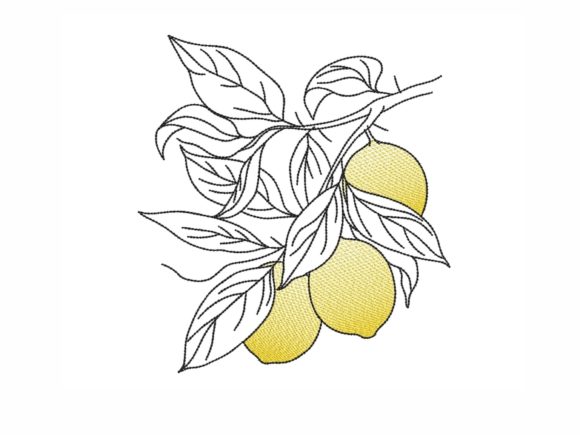
As an embroidery designer who’s digitized and stitched hundreds of small business projects—from café aprons to boutique tote bags—I immediately recognized Lemons as more than just a food-themed motif. It carries a clean, optimistic energy—neither overly rustic nor sterile, but warmly modern with quiet confidence. The title alone signals freshness and approachability, while the description (“a fresh touch to your beautiful creations”) hints at versatility without sacrificing charm. For a small business owner or craft brand, that balance is gold: it feels handmade yet polished, playful yet trustworthy.
Real-World Business Use: Where Lemons Shines
Lemons works exceptionally well across high-visibility, high-value merchandise categories. On embroidered patches—especially 2”–3” velcro-backed or sew-on versions—it reads clearly at arm’s length and reinforces brand identity on staff uniforms, jackets, or product packaging. As a chest logo on custom apparel like chef coats or florist smocks, its organic shape lends natural flow without competing with garment structure. For cap embroidery, the design’s central focal point and moderate width (assuming standard digitization) make it ideal for front panels—no awkward stretching or distortion required.
Tote bag design benefits from Lemons’s visual weight: it anchors the side or bottom corner without overwhelming hand-stitched or printed text. As apron embroidery, it adds personality without clutter—perfect for bakeries, juice bars, or artisan studios wanting to signal quality and care. Even as a subtle sleeve detail or tag accent on handmade product labels, Lemons delivers instant recognition and warmth. And because it fits naturally within the Food category, it resonates authentically with cafés, preserves makers, farmers’ market vendors, and wellness brands—no forced reinterpretation needed.
Where to Use Lemons Thoughtfully—Not Everywhere
Like any strong machine embroidery design, Lemons demands thoughtful placement. Avoid scaling it below 1.5” for embroidered patches—fine details (like leaf veins or citrus texture) may collapse or stitch poorly on dense fabrics. Cap fronts with curved crowns require careful digitizing; if the original digital embroidery file wasn’t optimized for curvature, test stitching on a mock cap first. Similarly, textured fabric—burlap, heavy linen, or quilted canvas—can mute fine outlines, so adjust stabilizer choice accordingly.
Dark uniforms demand intentional thread color selection: lemon yellow alone won’t pop on navy or charcoal. Layer it with contrasting stem or shadow threads—or consider a two-tone version (e.g., bright yellow fruit + deep green leaves) to ensure legibility after repeated washing. High stitch density can also be a concern if the design includes tight fills or intricate highlights; always inspect the file for potential puckering on lightweight cotton or stretch blends. When used on product packaging accents or tiny gift tags, confirm spacing between elements allows for clean cutting and clean hooping.
Brand Identity & Customer Trust: More Than Just a Lemon
In merchandising, consistency builds trust—and Lemons supports that beautifully. Its friendly clarity makes it instantly memorable for repeat customers, whether stitched on a reusable tote handed out at a local event or embroidered on the pocket of a pet brand’s staff apron. Unlike generic clip art, a well-executed embroidered patch with Lemons signals intentionality: this business values craftsmanship, attention to detail, and cohesive visual storytelling.
For Etsy sellers and handmade brands, Lemons strengthens perceived value. Customers associate precise, balanced embroidery with premium offerings—even when applied to affordable items like tea towels or bandanas. Visually, it bridges “handmade product” authenticity with commercial polish, helping small businesses stand out in crowded markets. Used alongside complementary design assets—like coordinating fonts or packaging stickers—it becomes part of a scalable brand system, not just a one-off decoration.
Practical Designer Notes Before You Stitch
Before launching Lemons into production, follow these tried-and-true steps:
- Test in black and white first—this reveals contrast issues, hidden overlaps, and problematic spacing you might miss in color.
- Check small patch size performance: resize to your target dimensions (e.g., 2” wide) and verify all elements remain distinct and hoop-friendly.
- Review thread color contrast on your actual fabric swatches—not just screen previews. Lighting changes everything.
- Inspect spacing and underlay: tight corners or narrow stems need proper underlay to prevent gapping on stretchy or unstable fabrics.
- Confirm hoop size compatibility—some embroidery file versions may require larger hoops than your smallest machine supports.
- Test on real fabric with your chosen stabilizer. A tear-away may work on cotton duck, but cut-away is safer for knits or caps.
- Create a printable mockup for client approval—show how Lemons looks on their actual apron style or tote material, not just a generic template.
- Compare beside other design assets: does it scale consistently with your logo? Does the line weight match your sleeve monogram or tag font?
- Confirm commercial licensing before use on resale items—since this is a digital embroidery file intended for small business merch, ensure usage rights cover your intended application (e.g., resale on apparel, wholesale distribution, or digital product bundles).
Ultimately, Lemons isn’t just a cheerful food motif—it’s a strategic branding tool. Whether you're building a new bakery’s identity or refreshing a craft studio’s merchandise lineup, it offers freshness without fragility, simplicity without sterility, and professionalism rooted in genuine charm. As a working commercial embroidery asset, it earns its place in your library—not because it’s trendy, but because it performs.