Few Have Died
A Bold, Witty Kitchen Statement That Stops Shoppers in Their Tracks
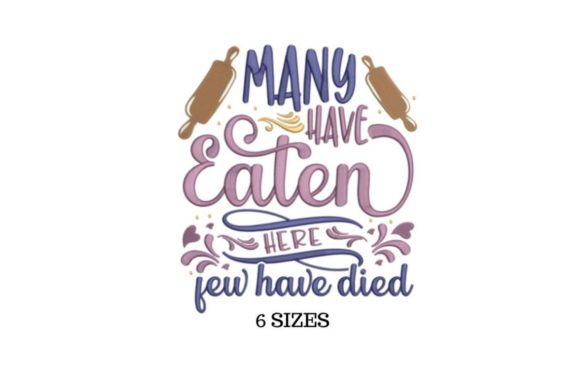
As an embroidery designer who’s prepped over 200 craft fair booths—and shipped thousands of digital embroidery files to Etsy sellers, boutique makers, and small shop owners—I’ll say it plainly: Few Have Died is not your typical dessert-themed embroidery design. It’s got bite. It’s clever without being crass, confident without shouting, and instantly memorable in a sea of “Sweet Treats” and “Bake Sale Queen” slogans. First impression? Bold, modern, and refreshingly dry—like a perfectly salted caramel brownie. It leans into farmhouse charm but with a wink, making it ideal for bakers who love humor, handmade quality, and subtle storytelling.
Where Few Have Died Shines on Craft Fair Products
In my booth setup—featuring embroidered tote bags, aprons, tea towels, patches, fabric pouches, and pillow covers—Few Have Died consistently draws double-takes. Here’s where it performs strongest:
- Tea towel embroidery: Printed mockups don’t do it justice—on natural linen or cotton terry, the phrase reads cleanly at 4–5 inches wide. The contrast between crisp lettering and soft fabric texture elevates the whole piece from kitchen accessory to giftable art.
- Apron embroidery: Centered above the pocket or subtly on the bib, it adds personality without overwhelming. Customers love how it signals “this baker knows their craft—and their dark humor.”
- Embroidered patch: Sized at 2.5–3 inches, it holds up beautifully on denim jackets, canvas market bags, or even kids’ lunch totes. Its wit makes it highly shareable—ideal for Instagram-driven Etsy sellers.
- Tote bag design: As a focal point on the front panel (not too large, not too small), it balances utility and attitude. Pair it with neutral canvas or oatmeal linen, and you’ve got a small shop product that feels premium, not gimmicky.
It’s less effective on curved surfaces like caps—tight letter spacing risks legibility loss—and doesn’t translate well to dense-textured fabrics like heavy terry or looped terrycloth unless stitch density is carefully managed.
What Makes Few Have Died a Smart Craft Fair & Etsy Seller Choice
This machine embroidery design works because it’s immediately understandable, yet layered enough to invite conversation. At a glance, shoppers get the humor and theme (“Dessert,” yes—but also resilience, passion, and quiet pride). Unlike overly cutesy or generic phrases, Few Have Died feels intentional, which raises perceived value. Buyers associate that intentionality with handmade quality—and they pay more for it.
For batch production? Highly repeatable. No intricate flourishes or gradient fills mean consistent results across hoop sizes and fabric types. It photographs exceptionally well for Etsy listings—clean lines pop against light backgrounds, and minimal thread colors keep editing simple. Bonus: it scales elegantly. Use it large as a statement on a pillow cover, or shrink it slightly for a delicate accent on a fabric pouch or gift tag.
Careful-Use Notes Every Embroidery Designer Should Check
Even witty designs need technical respect. Before cutting fabric or loading your embroidery file:
- Test on scrap fabric first, especially if using textured kitchen towels—dense stitch areas may flatten pile or cause puckering.
- Check thread contrast on dark fabric. Light gray or cream thread reads softer than white; avoid yellow or pastel threads that fade into warm-toned linens.
- Review spacing and kerning. Tight lettering can blur at under 2 inches—confirm readability on your smallest intended use (e.g., a 1.75" patch).
- Confirm hoop size compatibility. If your digitizer didn’t specify, assume standard 4x4 or 5x7—don’t force it into a tiny hoop without re-digitizing.
- Choose stabilizer wisely. Lightweight cutaway works best for stable fabrics like cotton canvas; tear-away suffices for smooth tea towels. Skip fusible web alone—it won’t support stitch density.
Design Assets That Build Booth Strength & Brand Consistency
Few Have Died isn’t just a standalone embroidery file—it’s a brand amplifier. When paired with cohesive design assets (think matching printable mockups, simple SVG add-ons for packaging, or coordinating label stickers), it strengthens your entire small shop product line. On a crowded craft fair table, this design stands out not because it’s loud, but because it’s distinctly human. It tells a story customers want to carry home—and share. That kind of emotional resonance boosts booth dwell time, drives social tags, and increases repeat visits.
For Etsy sellers, it’s a keyword-friendly win: “baker gift,” “kitchen humor embroidery,” “funny tea towel design”—all align naturally. And because it’s rooted in the Dessert category yet transcends sweetness, it avoids seasonal saturation. You’re not selling holiday cookies—you’re selling identity.
Final Designer Recommendation: One Real Mockup Changes Everything
Before listing Few Have Died as a digital embroidery file—or stitching 50 aprons for your next market—make one real mockup. Not a digital preview. Not a flat lay on a white background. Stitch it onto the exact fabric you’ll sell, photograph it in natural light beside a real pastry or mixing bowl, and hold it up in your booth space. Does it hold its own next to hand-poured candles or ceramic mugs? Does it spark a smile or a question? If yes, you’ve got a keeper.
Also: confirm commercial licensing before selling finished products. The description says “Just sew it on any kind of fabric, as it will stitch out wonderfully”—but that doesn’t automatically grant resale rights. Always verify terms with the original designer or marketplace.
In short: Few Have Died is more than a clever phrase. It’s a craft fair-ready, Etsy-optimized, emotionally intelligent embroidery file that delivers wit, wearability, and wow—without compromising on production practicality. For handmade product creators who value both heart and hustle, it’s a rare find: effortless to produce, impossible to ignore.